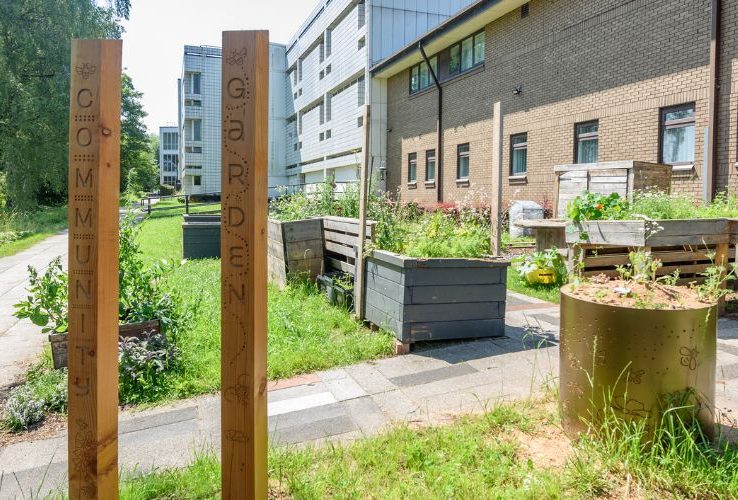


The University of Salford boosts biodiversity on campus with the installation of Niche habitats.
Grounds and sustainability teams at the University of Salford enhanced biodiversity on campus with the installation of several Niche Bee Posts, habitat signs and sand planters as part of the University’s Pollinator Strategy. The project which was delivered by Niche in March 2025, supports Salford’s wider sustainability goals of creating a greener, more engaging estate that connects people with nature whilst delivering measurable ecological benefits.
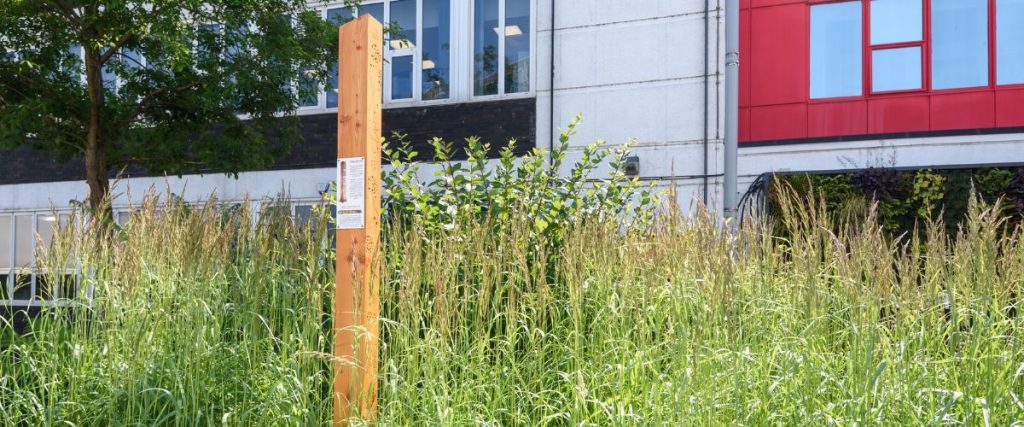
Working collaboratively with the Sustainability Department and ecological experts, the grounds team selected sites that would maximise ecological value and visibility. Niche’s bee posts, customised habitat signs and sand planters were installed across wildflower meadows, urban landscape areas and the community garden, offering a variety of nesting conditions for invertebrates and pollinators. Four different bee post designs were used to cater for a broad range of species and landscape settings.
Designed and installed by our specialists, the Bee Posts are a high-performance habitat structure developed specifically for solitary bees and wasps. Unlike many decorative and mass-produced ‘bee hotels’, Niche’s commercial-grade habitats are based on ecological evidence and a deep understanding of the target species, ensuring they truly function as productive nesting sites.
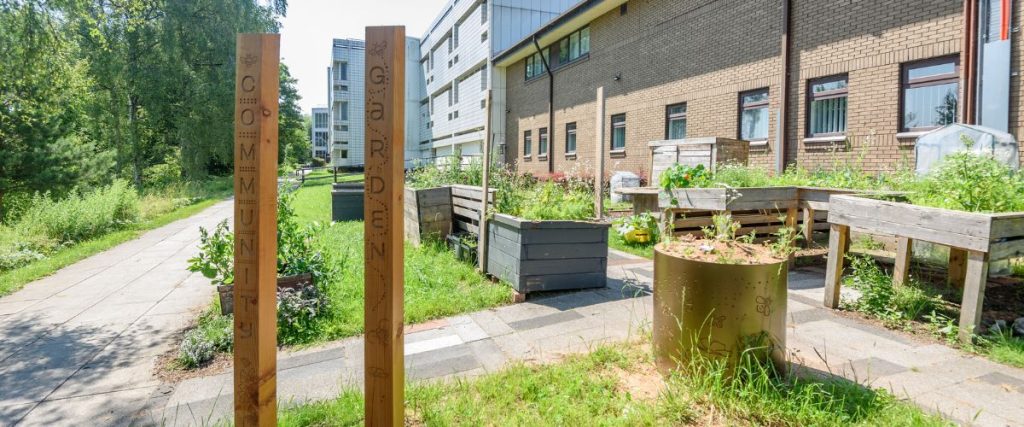
After installation, two return visits to audit the site confirmed the project’s success. All habitats showed active use, with several demonstrating prolific nesting. Leafcutter bees, mason bees and yellow-face bees were recorded alongside ruby-tailed wasps, potter wasps and aphid-hunting wasps. The vast diversity of species using the habitats highlights the effectiveness of the design and the importance of careful site selection by the university’s grounds and ecology teams.
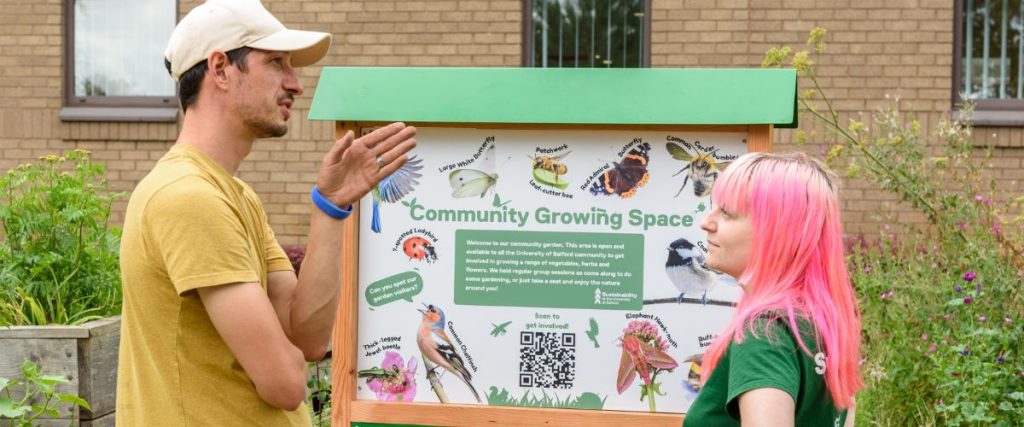
The University of Salford’s pollinator project illustrates how well-managed landscapes can support biodiversity without compromising presentation or maintenance standards. Standing deadwood – a critically important but often missing habitat in urban areas, was effectively replaced by these durable, purpose-built structures, providing vital nesting sites in a clean, professional form that suits managed grounds.
For the Salford University grounds team, the Niche’s habitat solutions have delivered tangible results with thriving pollinator populations, positive engagement with staff and students and visible progress towards achieving the areas biodiversity goals.
With science-led design, low maintenance and long lasting materials, Niche habitats are helping land managers across the UK create meaningful and functional spaces for nature that are proven to work!
Article originally written for Groundskeeping Journal, read the original article here.